How cannabis works: The endocannabinoid system in detail
The endocannabinoid system (ECS) is a complex network of receptors and molecules fundamental to the regulation of human health. Although discovered through cannabis research, the SEC plays an autonomous and essential role in maintaining homeostasis - the stability of the body's internal environment despite external fluctuations. Understanding the SEC is crucial to understanding how cannabis interacts with our bodies and why it is used for its therapeutic and wellness effects.
1. The endocannabinoid system: a biological overview
To begin with, let's delve into some basic biology. The ECS consists mainly of two types of receptors: CB1 and CB2. CB1 receptors are mainly located in the central nervous system, glands and certain organs, while CB2 receptors are mainly found in the immune system and other peripheral structures. Although these two receptors have different localizations, some tissues may possess both types, each responsible for specific activities.
The researchers believe that there may be other receptors in the ECS, opening up new perspectives in understanding how the ECS regulates health. These receptors are stimulated by endogenous molecules called endocannabinoids, produced naturally by the human body.
2. Endocannabinoids: naturally produced by the human body
The body naturally produces six common endocannabinoids, the most famous of which is anandamide, nicknamed the "happy hormone". Anandamide is essential for modulating functions such as mood, motivation and stress management. Scientists discovered anandamide while researching CB1 and CB2 receptors, realizing that our bodies have an internal mechanism influencing these receptors.
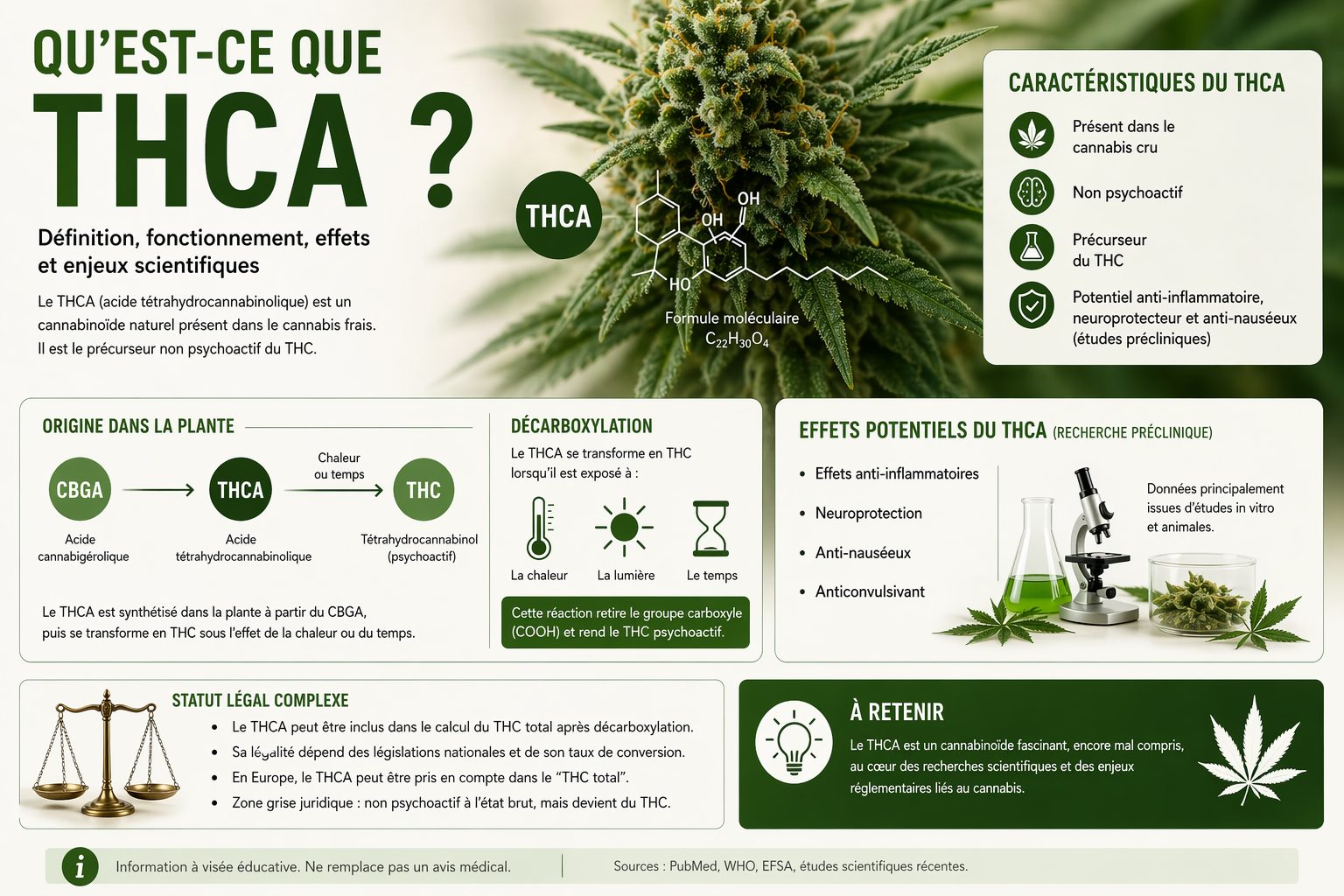
Cannabis, with its compounds called phytocannabinoids, can also stimulate the SEC. Phytocannabinoids, found mainly in the hemp plant, resemble their endogenous counterparts at the molecular level, making them easy to insert into SEC receptors. This mimicry enables phytocannabinoids to modulate biological responses similar to those of endocannabinoids, partly explaining the well-known effects of cannabis on the human body.
3. Phytocannabinoids and their interaction with SEC
To date, scientists have identified over 85 phytocannabinoids in cannabis, some of which are psychoactive (such as THC), while others are not (such as CBD). These compounds, contained in the trichomes of the cannabis plant, act as natural stimulators of the ECS. THC, for example, binds primarily to CB1 receptors, producing psychoactive effects by temporarily blocking the binding of anandamide, resulting in a feeling of well-being and relaxation.
However, phytocannabinoids don't simply replace endocannabinoids: they complement them. By administering small doses of cannabinoids, the body is encouraged to produce more endocannabinoids and receptors, helping to improve the efficacy of ECS. This process may explain why some people do not immediately feel the effects of cannabis, but perceive their intensity on subsequent uses.
4. The role of ECS in maintaining homeostasis
The SEC acts primarily to maintain homeostasis, the body's internal balance. This function is crucial, as it enables cells to function optimally, despite external and internal variations. In other words, SEC helps the body to remain stable and healthy in the face of environmental changes.
The SEC is involved in several key biological areas:
- Nervous system: regulates pain, mood, memory and appetite.
- Immune system: participates in the inflammatory response, protecting against infections and autoimmune diseases.
- Energy metabolism: influences fat and sugar metabolism.
- Stress management: modulates the release of cortisol and other stress hormones.
These functions show how essential a functional SEC is for well-being and health, and this is where cannabis can play a beneficial role, especially for those with weakened or dysfunctional SEC.
5. The potential benefits of cannabis on the SEC
The therapeutic effects of cannabis, thanks in particular to cannabinoids such as THC and CBD, are well documented in the management of chronic pain, inflammation, anxiety and even neurological disorders such as epilepsy. In addition to its isolated effects, cannabis acts synergistically: the various cannabinoids, terpenes and flavonoids work together, increasing the efficacy of the treatment, a phenomenon known as the "entourage effect".
For example, cannabis users often report reduced pain and inflammation, improved sleep and reduced anxiety. Cannabis-based treatments thus enable patients to better manage conditions for which conventional treatments are sometimes inadequate.
6. Methods of cannabis consumption and their impact on the SEC
Although inhalation is a popular method of consumption, notably via smoke or vaporization, there are other ways to enjoy the benefits of cannabis without irritating the respiratory tract:
- Ingestion: Oils, capsules and edibles allow prolonged and regular absorption of cannabinoids, ideal for ongoing therapeutic use.
- Topical application: CBD creams and balms are applied directly to the skin to relieve muscle and joint pain.
- Sublingual tinctures: allow rapid absorption under the tongue, providing almost immediate effects, often used to manage anxiety or acute pain.
These different methods offer consumption options tailored to individual needs, maximizing therapeutic effects while minimizing potential side effects.
7. Is cannabis essential for a functional SEC?
Although a functional SEC is essential for good health, it is not necessary to use cannabis to maintain this balance. The body naturally produces endocannabinoids to feed its receptors. However, for those experiencing SEC dysfunction, phytocannabinoid supplements can offer effective support.
Recent research shows that low doses of cannabinoids from cannabis can encourage the body to produce more endocannabinoids and develop more receptors, thereby enhancing the functionality of the ECS. This could explain why some people experience positive effects with cannabis, even when used in small quantities.
8. Medical perception and the future of cannabis treatments
Although some healthcare professionals remain skeptical about the idea of using cannabis as a treatment, studies continue to prove that the cannabis plant's natural cannabinoids are safe and effective. In fact, unlike synthetic cannabinoids, natural cannabinoids interact harmoniously with SEC and present a favorable safety profile.
The future of cannabis and SEC research is bright, as scientists constantly explore new ways to use this plant to improve human health. In the meantime, medical and recreational cannabis users continue to benefit from the balancing properties of SEC, whether they're looking for relief, relaxation or general well-being.
In conclusion, the SEC plays a crucial role in regulating human health, and cannabis, through its phytocannabinoids, acts as a natural catalyst to stimulate this vital system. Although our bodies produce their own endocannabinoids, cannabis supplements can offer additional support, enabling those in need to restore their internal balance and live healthier, more balanced lives.